


Artwork by Bruno Rios
The Time Machine transformed the idea of travelling through time by making it a technological act rather than a dream, supernatural journey or unexplained leap. H. G. Wells’s extraordinary novel carries its unnamed Traveller to the year 802,701, where humanity has divided into the Eloi and Morlocks, turning Victorian class divisions and evolutionary theory into a disturbing vision of the distant future. Published in 1895 after seven years of rewriting, The Time Machine remains one of the defining works of science fiction, a story not simply about where humanity might be going, but what might become of us when we get there.
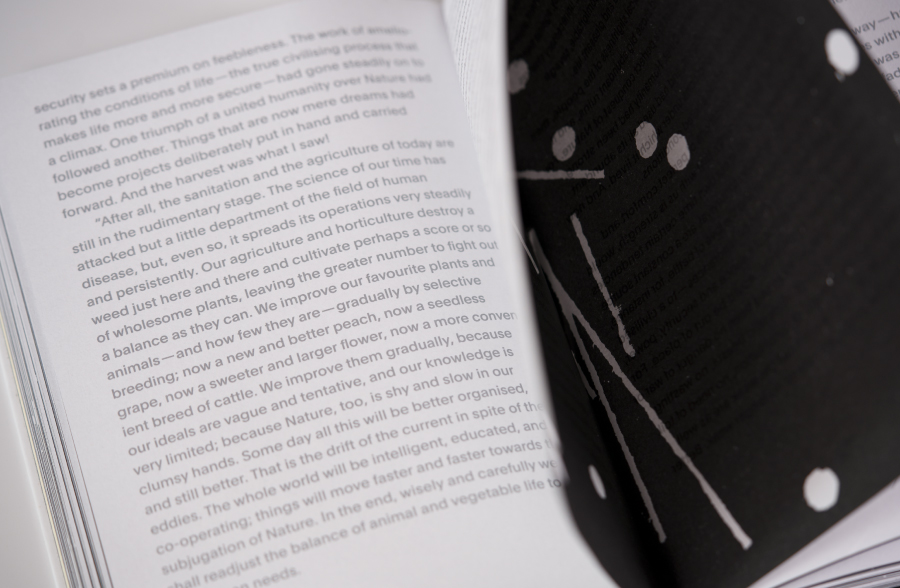
The edition is printed on three different papers, selected to create the gradual visual transition through the Traveller’s journey.
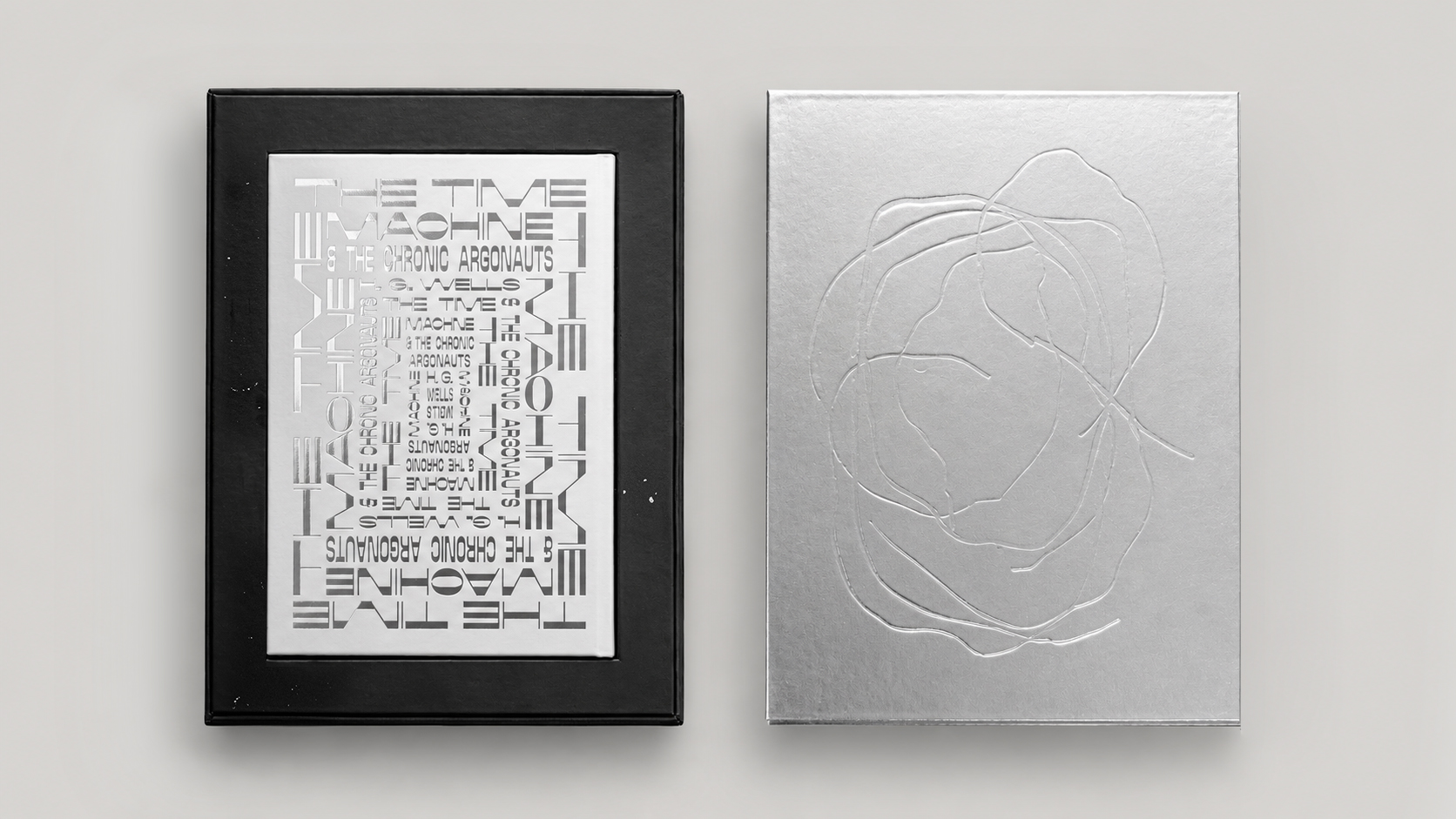
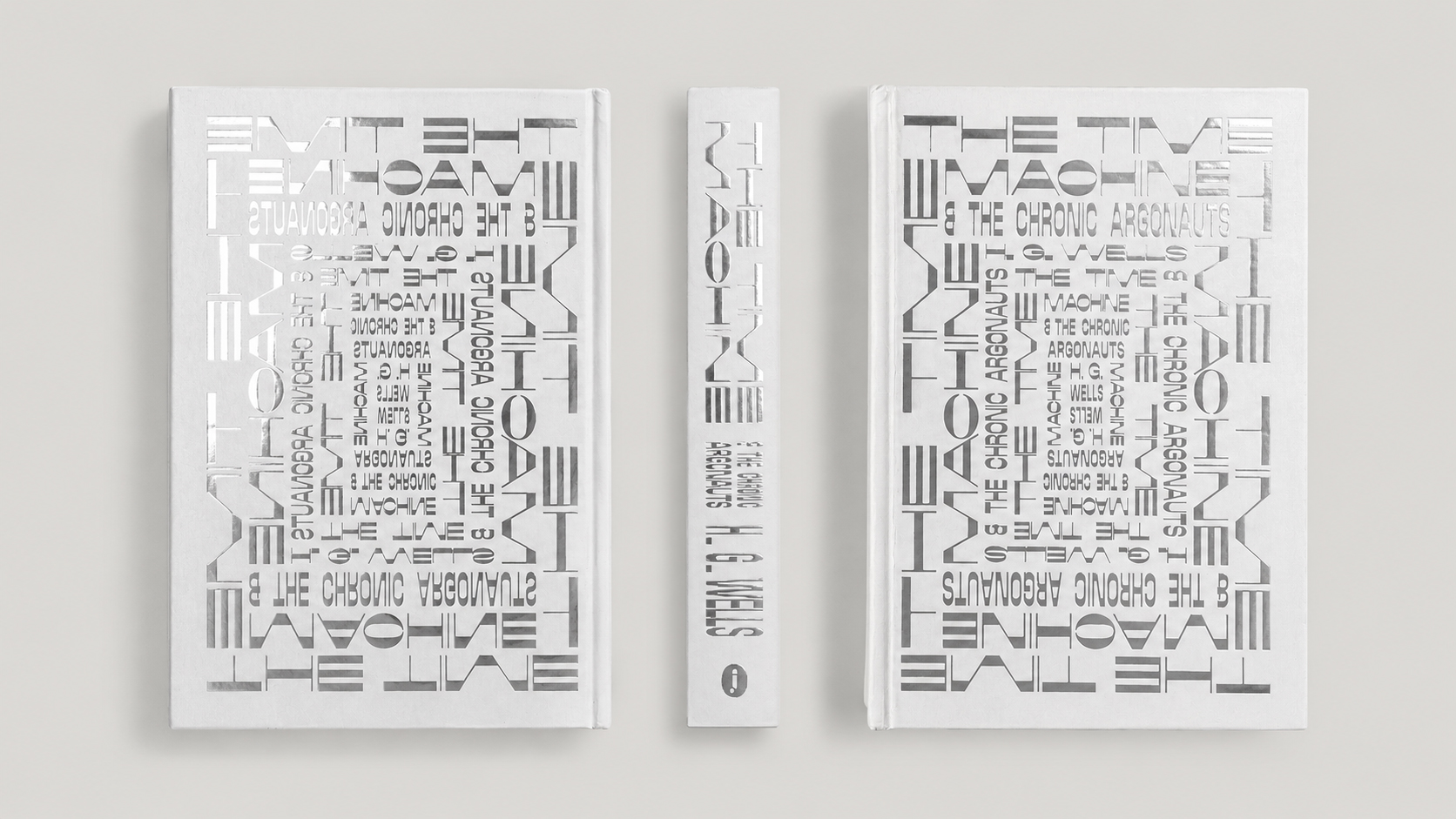
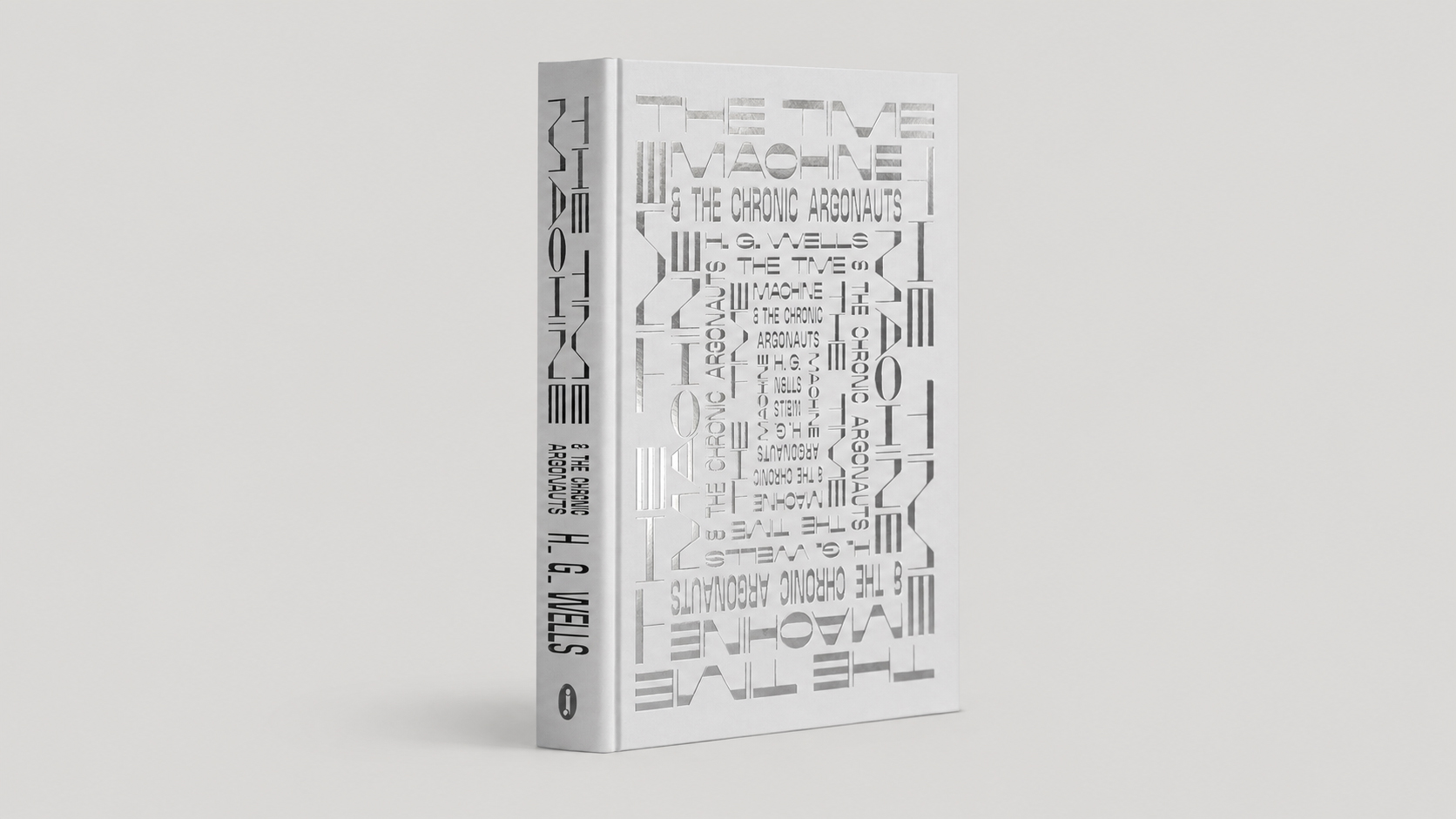
The text is printed in silver ink throughout, with typography specially developed for the edition and used as an integral part of its visual design.
The volume includes The Chronic Argonauts, Wells’s 1888 precursor to The Time Machine, presenting his earliest surviving version of the idea alongside the finished novel.
Original abstract illustrations run throughout the book, with the Morlock illustrations concealed inside specially folded pages.
The binding, cover and typographic treatment have all been designed specifically for this edition, turning the physical construction of the book into part of the experience of Wells’s journey through time.
£315
There is no attempt here to define what Wells’s future looks like. No portrait of the Time Traveller, no reconstructed machine, no definitive Eloi or Morlock. Every illustration is abstract, responding instead to movement, darkness, distance, disintegration and the unfamiliar, leaving Wells’s future inside the reader’s own imagination.
The illustrations are not simply placed alongside the text. They move through it, disappear into it and, in the case of the Morlocks, are concealed inside folded pages. Their subterranean world is physically present but hidden from an ordinary reading. The reader can look inside the folds or leave them untouched, mirroring the division Wells created between the world above and the world below.
Typography becomes illustration too. Letter forms are used as part of the visual language of the book, particularly on the cover, while three different papers move from light towards darkness as the journey progresses. Silver ink runs throughout, changing from bright against white to spectral against grey and almost luminous against black.
Nothing here is designed simply to decorate the novel or reproduce scenes from it. Illustration, typography, paper and the physical construction of the pages all respond to the experience of Wells’s journey. The result is an edition in which the book itself changes as the Traveller moves further from the world he knows.
H.G. Wells (1866–1946) was an English writer, journalist and social thinker, and one of the formative figures of modern science fiction. Born in Bromley, Kent, he grew up with financial insecurity and was apprenticed to a draper before winning a scholarship to study biology under T. H. Huxley, an education that profoundly shaped his writing. He achieved success with The Time Machine (1895), followed by The Island of Doctor Moreau, The Invisible Man and The War of the Worlds, using scientific speculation to explore evolution, class, technology and the future of human society. His career extended far beyond fiction: Wells wrote history, politics and social criticism, advocated education and international cooperation, and spent much of his life thinking about how civilisation might be organised for the future. He died in London in 1946, aged 79.